Pensée pour les systèmes, l’implémentation et l’IA d’entreprise
Perspectives sur la conception système, l’intégration, l’implémentation, la préparation IA et le jugement nécessaire pour faire avancer les technologies sérieuses.
Notes de terrain
 AI
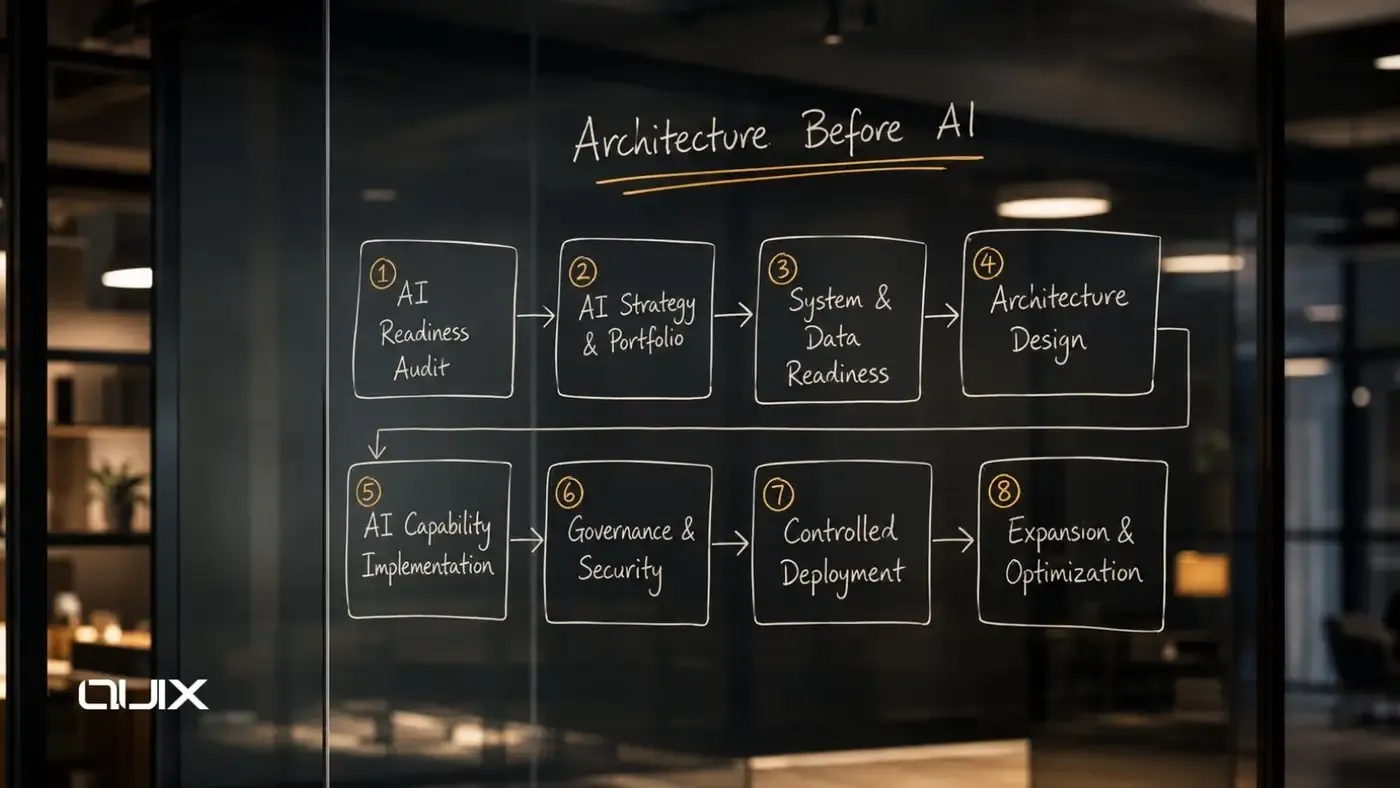
AIThe Quix Framework for Enterprise AI Transformation
Enterprise AI transformation is not about deploying more AI tools. It is about building the architecture, data foundation, and governance that turns AI from experiments into reliable operational systems.
Lire la suite → Systems
The Quix Framework for Enterprise System Design
The Quix framework for enterprise system design is a structured methodology for building intelligent, scalable operating systems — starting with the business, not the technology.
Lire la suite →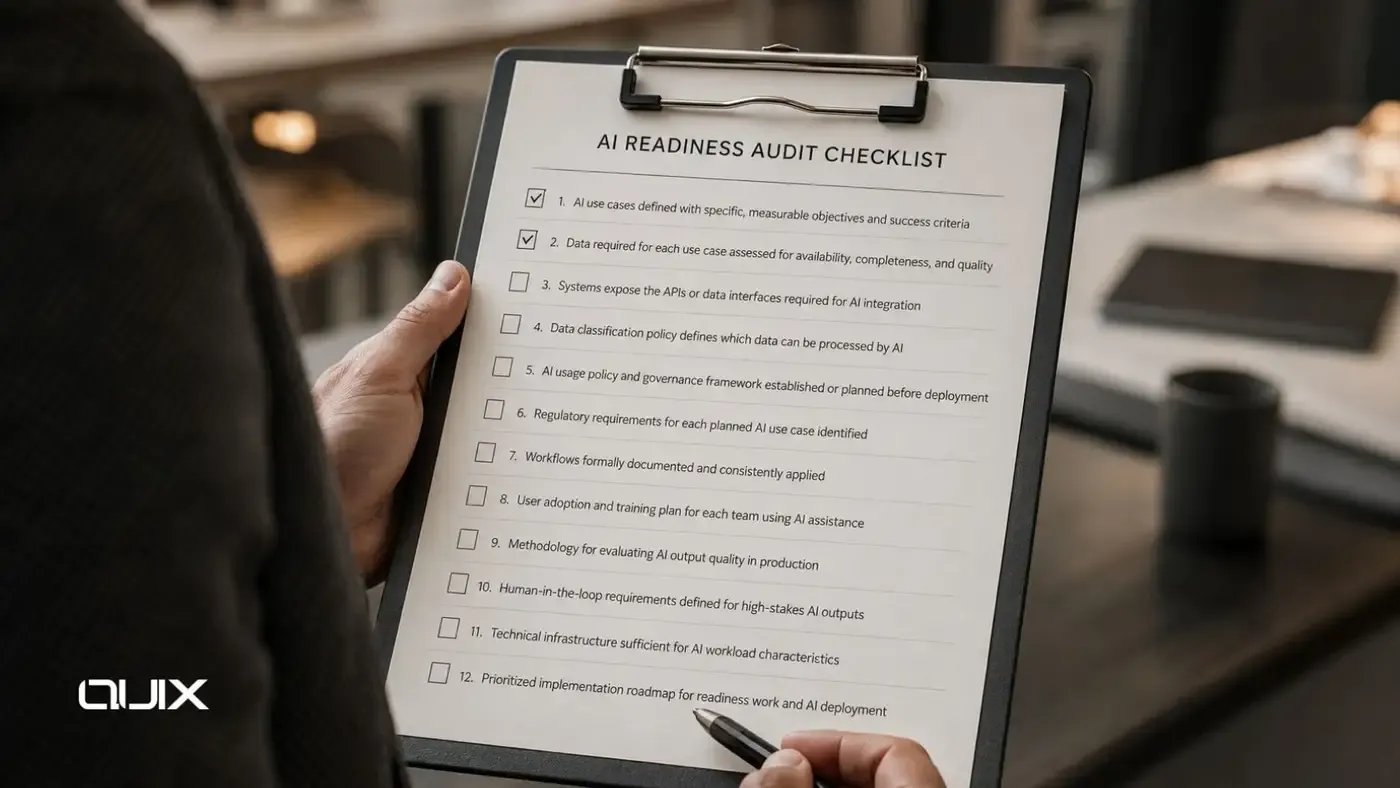 AI
AIEnterprise AI Readiness Audit: What to Check Before You Build
The gap between "we want to use AI" and "our systems are ready to support it" is where most enterprise AI programs stall. An AI readiness audit closes that gap before it becomes a production failure.
Lire la suite →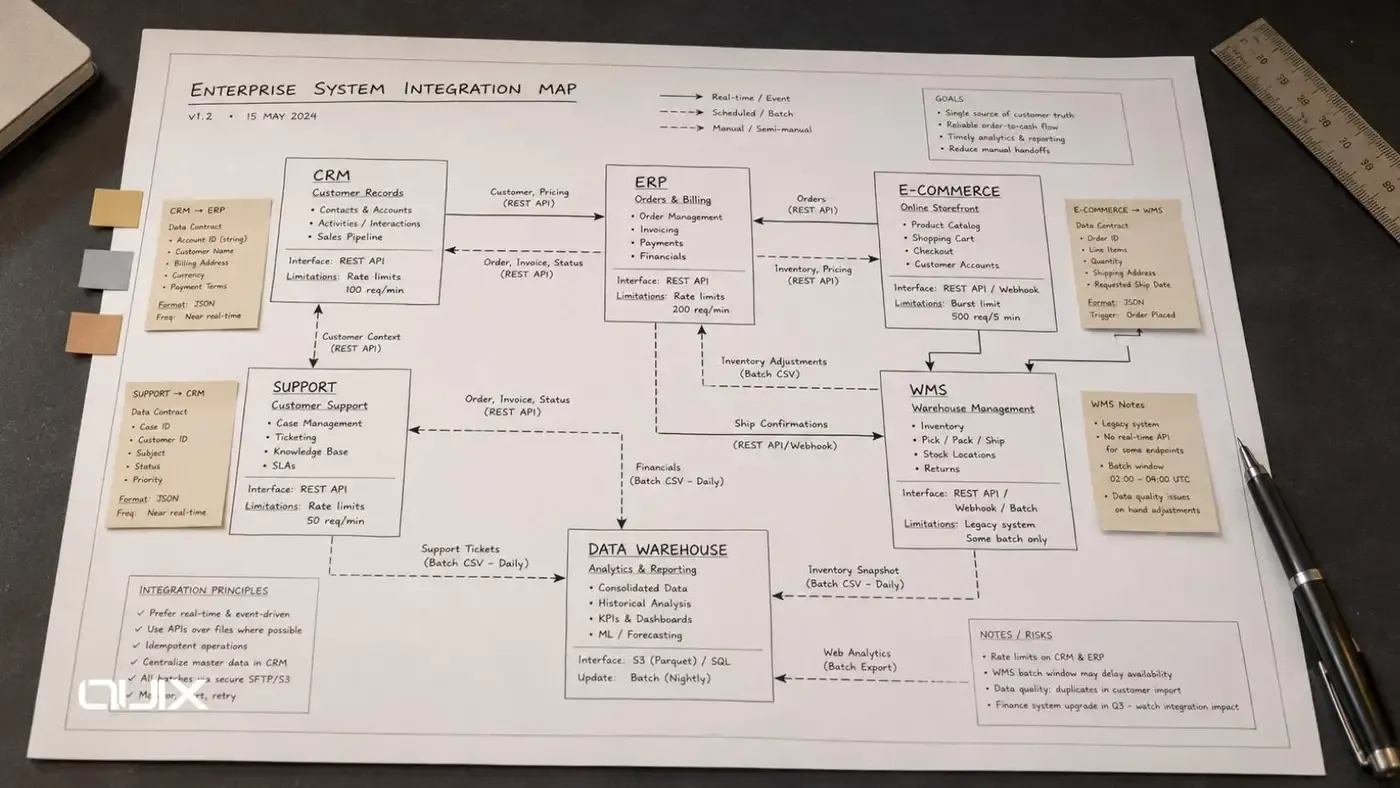 Integration
The Quix Framework for Enterprise System Integration
The Quix framework for enterprise system integration is a structured methodology for connecting enterprise systems around operations — not just tools. Here is how it works.
Lire la suite → Implementation
The Quix Framework for Enterprise Solution Implementation
The Quix implementation framework treats deployment as operational transformation — not a technical handoff. Here is the methodology that turns implementation investment into lasting enterprise capability.
Lire la suite →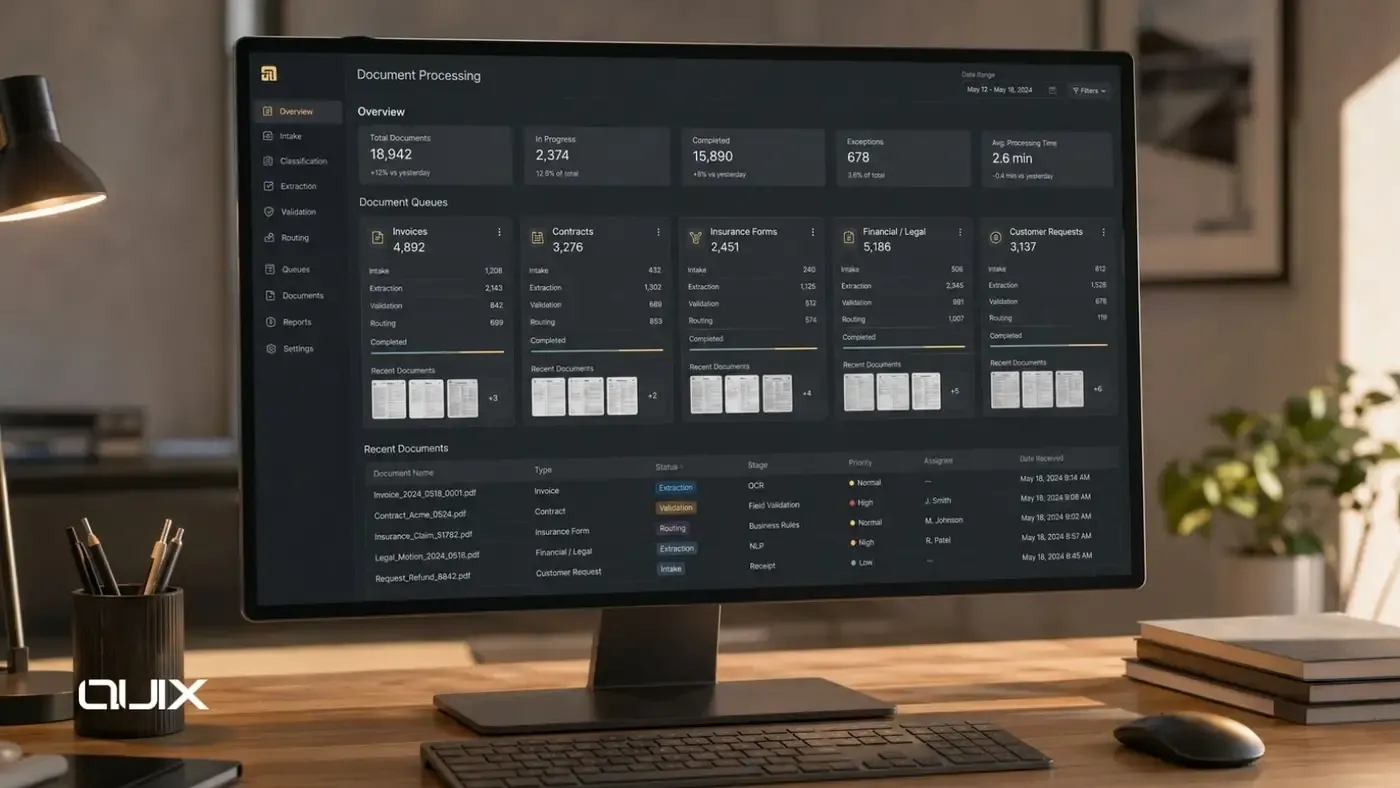 AI
AIAI Document Processing for Enterprise Teams
Document-heavy workflows are among the highest-volume, highest-cost manual operations in enterprise organizations. AI document processing converts them from manual bottlenecks into governed automated pipelines.
Lire la suite →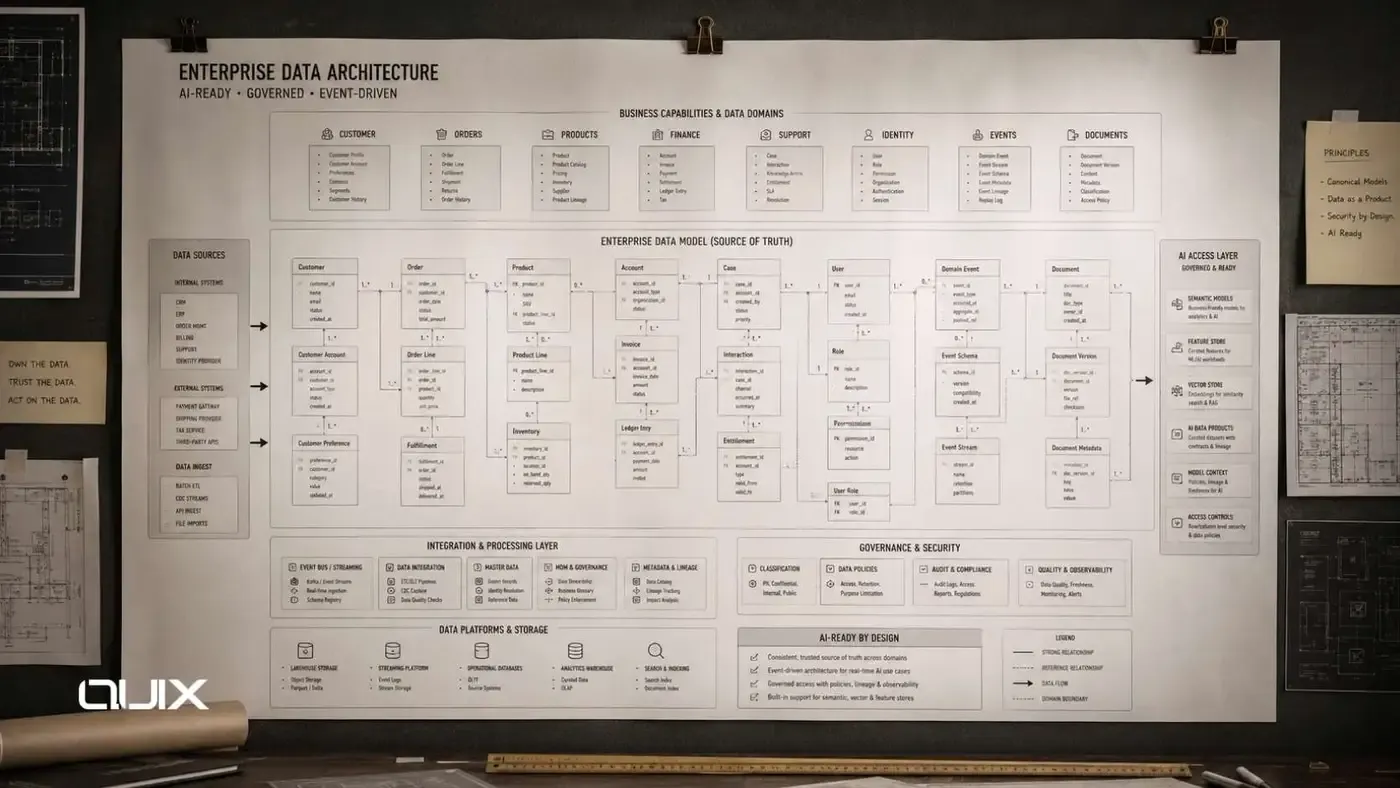 Systems
How to Design Enterprise Systems That Are Ready for AI
Enterprise AI fails when the systems beneath it are not ready. Here is how to design the architecture, data, integration, and governance that intelligent systems actually require.
Lire la suite → Integration
How to Build a Connected Enterprise Technology Stack
A connected enterprise technology stack is not built by adding more tools. It is built by designing the architecture that makes the tools you have work together as one operating system.
Lire la suite →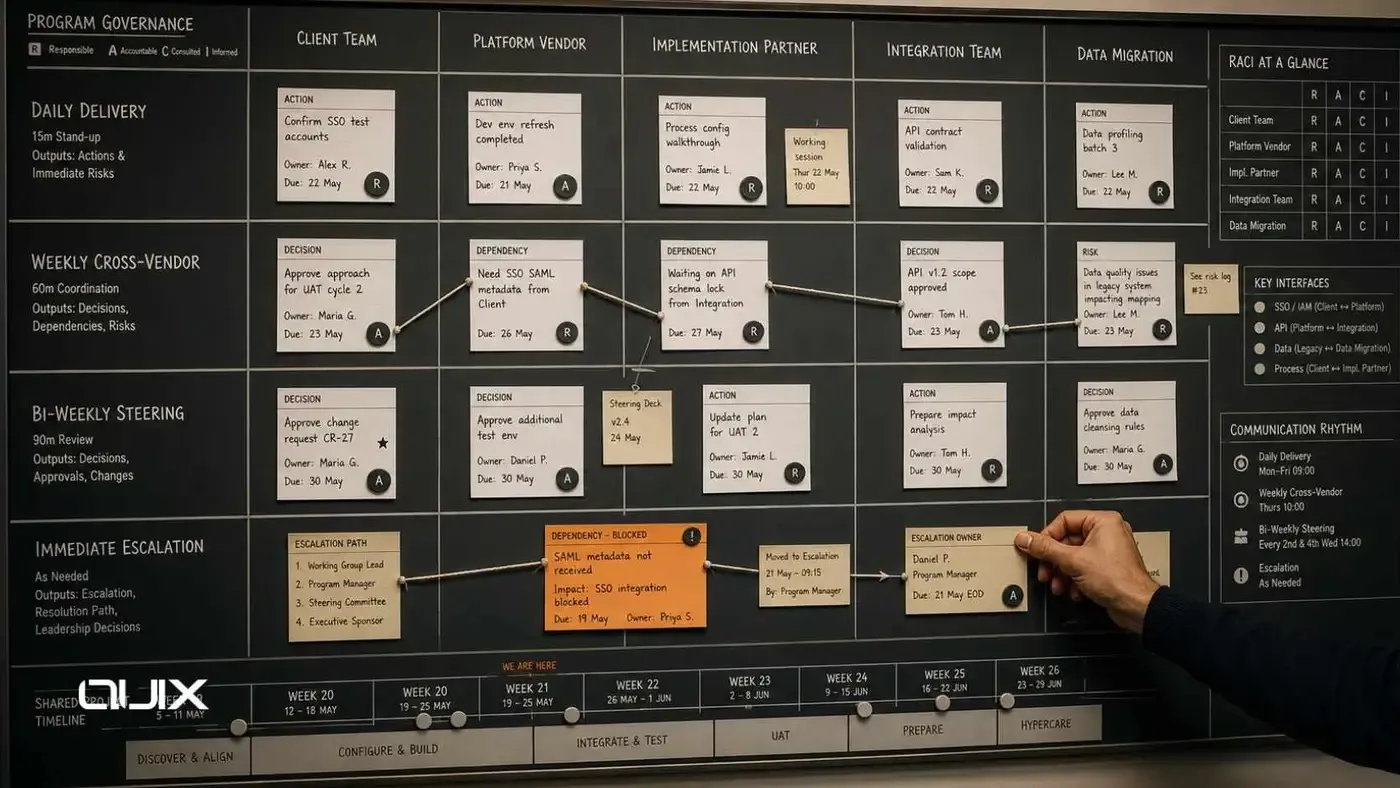 Implementation
Vendor Coordination in Complex Enterprise Implementations
Multi-vendor enterprise implementations fail when accountability is diffuse, interfaces are unclear, and no one has the authority to resolve cross-vendor dependencies in real time.
Lire la suite → AI
AIAI for Customer Support: When to Use Bots, Agents and Human-in-the-Loop Systems
The enterprise customer support decision is not whether to deploy AI — it is how to deploy the right AI for the right support complexity, without degrading the customer experience or the team's effectiveness.
Lire la suite →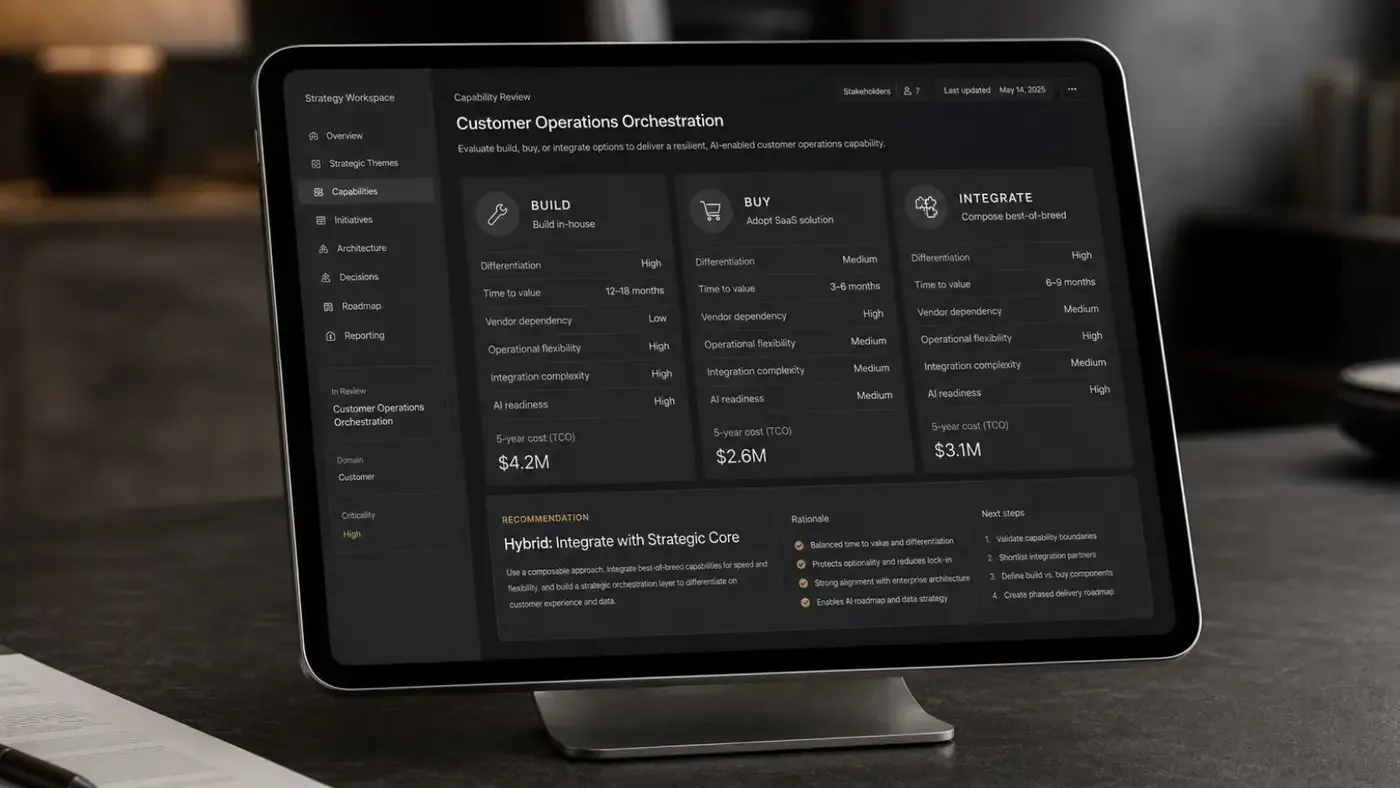 Systems
Build vs Buy vs Integrate: Choosing the Right Enterprise System Strategy
Build, buy, or integrate — this is one of the most consequential decisions in enterprise technology strategy. Here is how to make it with architectural clarity and business precision.
Lire la suite →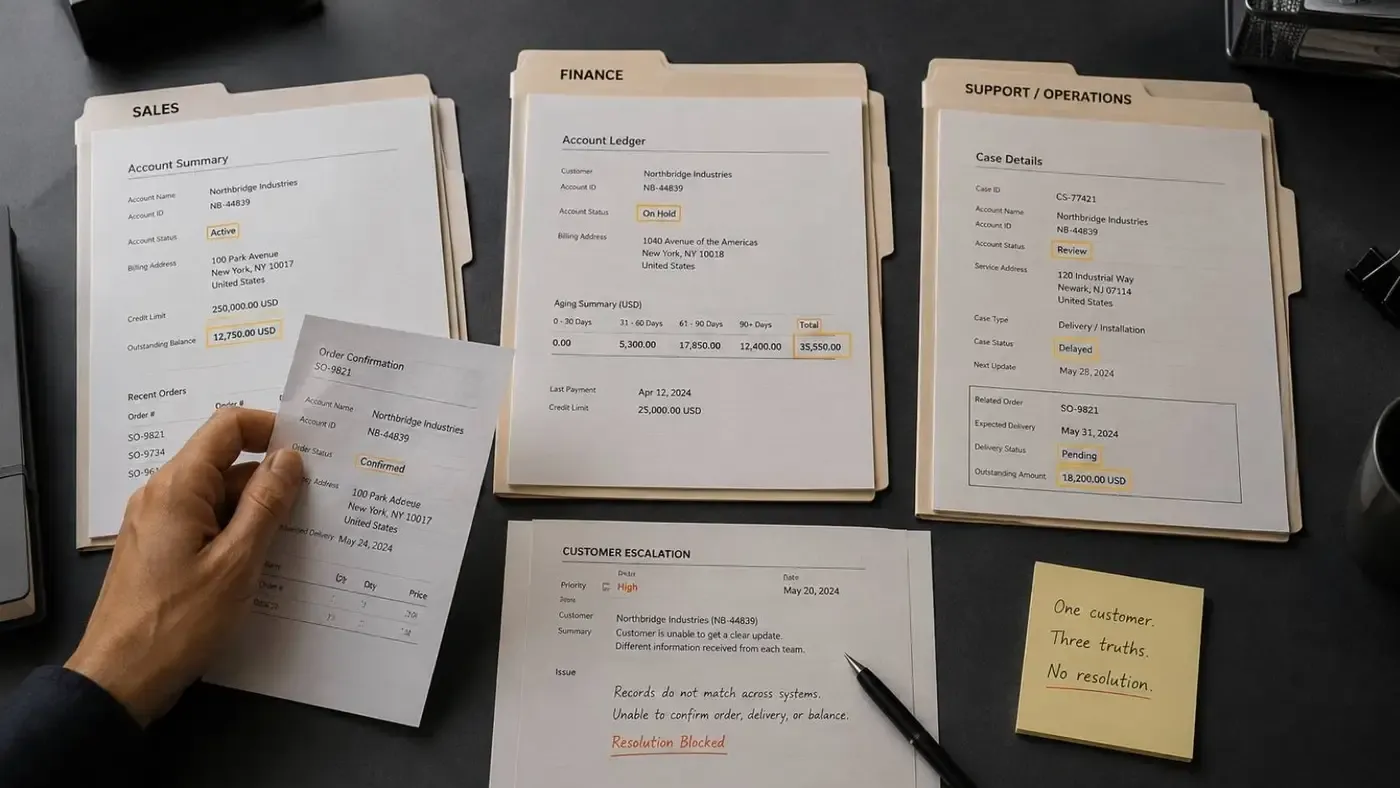 Integration
The Hidden Cost of Poor System Integration
Poor system integration rarely appears on a budget line. It appears as slow decisions, frustrated teams, broken customer journeys, and AI projects that never reach production.
Lire la suite → Implementation
Post-Implementation Optimization: What Happens After Launch?
Go-live is a milestone, not a finish line. The work that happens in the ninety days after launch determines whether an enterprise implementation delivers its business case or underperforms it.
Lire la suite → AI
AIAI-Powered CRM and Sales Operations: From Lead Scoring to Follow-Up Automation
AI improves CRM and sales operations when it is connected to the right data, integrated into the right workflows, and governed to maintain the data quality the CRM depends on.
Lire la suite → Systems
Enterprise System Design Checklist for High-Growth Companies
A practical checklist for enterprise leaders to assess whether their systems, processes, data, and governance are ready to support the next stage of growth.
Lire la suite → Integration
Enterprise Integration Security: Access Control, Data Protection and Governance
Integration is the most exposed surface in your enterprise architecture. Here is how to design access control, data protection, and governance that keeps it secure without slowing operations.
Lire la suite → Implementation
Data Migration Strategy for Enterprise System Implementation
Data migration is the most underestimated risk in enterprise implementation. A structured migration strategy converts that risk into a controlled, validated, reversible process.
Lire la suite → AI
AIAI Copilots for Internal Teams: How to Design Useful Enterprise Assistants
Generic AI chat interfaces produce generic value. Role-specific AI copilots designed around the data, tools, and workflows of specific teams produce genuine operational lift.
Lire la suite → Systems
Legacy Systems vs Modern Enterprise Architecture: When to Rebuild, Replace or Integrate
The decision to rebuild, replace, or integrate legacy systems is one of the most consequential choices in enterprise technology. Here is a structured framework for making it correctly.
Lire la suite → Integration
How to Integrate Legacy Systems With Modern Cloud Platforms
Integrating legacy systems with modern cloud platforms is one of the most consequential technical programs an enterprise can undertake. Here is how to do it without disrupting operations.
Lire la suite → Implementation
Quality Assurance in Enterprise Solution Implementation
Enterprise QA is not just testing before go-live. It is a structured discipline that spans the entire implementation lifecycle and determines whether the solution is trustworthy in production.
Lire la suite → AI
AIAI Workflow Automation for Operations, Sales and Support
AI workflow automation delivers its highest return when it is designed around enterprise systems — not bolted onto informal processes. Here is how to identify, design, and govern it correctly.
Lire la suite → Systems
Designing Data Flows for Modern Enterprise Operations
Modern enterprise operations depend on data that moves reliably between systems, teams, and AI infrastructure. Here is how to design data flows that support operational intelligence at scale.
Lire la suite → Integration
iPaaS vs Custom Integration: Which Is Right for Your Enterprise?
iPaaS delivers speed and convenience. Custom integration delivers control and depth. The choice between them determines the long-term architecture of your enterprise integration layer.
Lire la suite → Implementation
Change Management for Enterprise Technology Projects
Technology implementations fail at adoption, not deployment. Effective change management for enterprise technology is operational transformation — not a communications plan.
Lire la suite → AI
AIEnterprise AI Governance: Security, Accuracy and Control
AI without governance is not a capability. It is a liability. Enterprise AI governance defines the controls, policies, and accountability structures that make AI trustworthy at operational scale.
Lire la suite → Systems
Why Digital Transformation Fails Without System Thinking
Digital transformation fails when companies focus on tools before systems. System thinking connects strategy, people, processes, data, and governance into a coherent transformation approach.
Lire la suite → Integration
Real-Time Data Synchronization for Enterprise Systems
Real-time data synchronization keeps enterprise systems aligned across tools, teams, and AI infrastructure. Here is how to design it, when to use it, and what to avoid.
Lire la suite → Implementation
From Pilot to Production: How to Scale Enterprise Solutions Safely
Moving from pilot to production is where most enterprise solutions either prove themselves or reveal the gaps that the controlled pilot environment did not surface. Here is how to navigate it.
Lire la suite → AI
AIPrivate AI vs Public AI Tools for Enterprise Companies
The choice between private and public AI deployment models determines your security posture, compliance exposure, and operational flexibility for years. Here is how to make it correctly.
Lire la suite → Systems
The Enterprise System Blueprint: How to Structure People, Tools, Data and Workflows
An enterprise system blueprint connects people, tools, data, and workflows into one structured operating model. Here is how to build one and why it matters before any major implementation.
Lire la suite → Integration
Data Silos in Enterprise Operations: Causes, Costs and Solutions
Data silos are not a storage problem. They are a system design problem. Here is what causes them, what they cost, and how to eliminate them through integration architecture.
Lire la suite → Implementation
MVP vs Full-Scale Enterprise Implementation: How to Choose the Right Path
The choice between MVP, phased rollout, and full-scale enterprise implementation is a risk management decision. Here is how to make it correctly for your specific context.
Lire la suite → AI
AIHow to Integrate LLMs Into Existing Enterprise Systems
Integrating large language models into enterprise systems is not primarily an AI problem. It is an architecture problem — one that determines whether AI delivers operational value or creates security and accuracy risk.
Lire la suite → Systems
Business Process Architecture: Turning Operations Into Digital Systems
Business process architecture transforms fragmented, manual, or informal operations into structured digital systems. Here is how it works and why it matters before any implementation begins.
Lire la suite → Integration
CRM, ERP and Internal Tool Integration: Building a Unified Enterprise Stack
A unified enterprise stack connects CRM, ERP, finance, analytics, and internal tools into one coherent operating system. Here is how to design the integration that makes it work.
Lire la suite → Implementation
Requirements Discovery for Enterprise Systems: What to Define Before Build
Requirements discovery is the phase that determines whether an enterprise implementation succeeds or fails before a single line of code is written. Here is how to do it correctly.
Lire la suite → AI
AIRAG Systems Explained for Enterprise Knowledge Management
Retrieval-augmented generation turns enterprise knowledge bases into intelligent search systems that answer questions from authoritative sources — with citations. Here is how it works and how to build it.
Lire la suite → Systems
How to Design Scalable Enterprise Systems Before Growth Breaks Operations
Most operational breakdowns during growth are not caused by a lack of tools. They are caused by systems that were never designed to scale. Here is how to build them before growth forces the issue.
Lire la suite → Integration
API Integration Strategy for Enterprise Companies
A coherent API integration strategy is what separates enterprise systems that scale from those that fragment. Here is how to design it correctly from the start.
Lire la suite → Implementation
Why Enterprise Solutions Fail During Implementation
Enterprise implementations fail far more often than they should, and the causes are consistent. Understanding them before implementation begins is the most effective form of risk management.
Lire la suite → AI
AIAI Agents for Enterprise Operations: Use Cases, Architecture and Risks
AI agents represent a qualitative shift in enterprise automation — from scripted workflows to systems that plan and execute sequences of actions. The architecture and governance required to deploy them safely is substantial.
Lire la suite → Systems
Enterprise Architecture vs System Design: What Business Leaders Need to Know
Learn the difference between enterprise architecture and system design, when each matters, and how leaders can choose the right architecture model for scalable transformation.
Lire la suite → Integration
System Integration Architecture: Patterns, Risks and Best Practices
The pattern you choose for system integration architecture determines whether your connections scale reliably or become expensive technical debt. Here is how to choose and design correctly.
Lire la suite →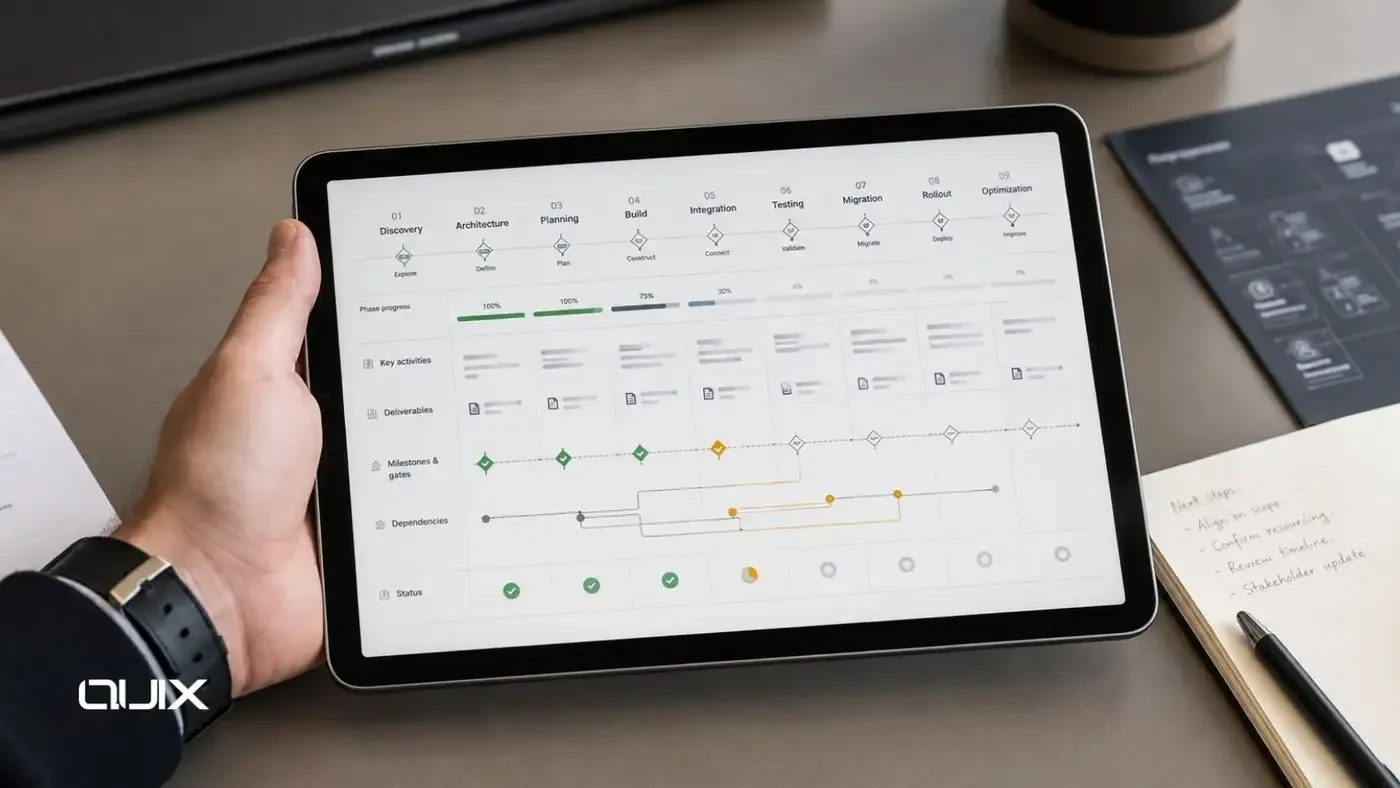 Implementation
The Enterprise Implementation Roadmap: Discovery, Build, Rollout and Optimization
A strong enterprise implementation roadmap defines not just what to build and when, but what decisions must be made at each stage, what risks must be controlled, and what success looks like before moving forward.
Lire la suite → AI
AIEnterprise AI Strategy: How to Adopt AI Without Creating Operational Chaos
Without a coherent strategy, enterprise AI adoption creates disconnected experiments, security gaps, inaccurate outputs, and operational chaos. Here is how to build a strategy that avoids these outcomes.
Lire la suite → Systems
What Is Enterprise System Design? A Practical Guide for Scaling Companies
Enterprise system design turns business operations, tools, data, workflows, and governance into one scalable operating system for growth.
Lire la suite → Integration
Enterprise System Integration: How to Connect Disconnected Business Tools
Disconnected business tools create invisible operational costs. Enterprise system integration replaces fragmented workflows with a connected digital ecosystem that scales with the business.
Lire la suite → Implementation
Enterprise Solution Implementation: From Strategy to Deployment
Enterprise solution implementation is more than deployment. It is the structured process of translating strategy into working systems that operate reliably in production and get adopted by the teams they serve.
Lire la suite → AI
AIEnterprise AI Solutions: How Companies Can Use AI Beyond Chatbots
Enterprise AI is not a chatbot. It is an operational capability that automates workflows, surfaces intelligence, processes documents, supports decisions, and transforms how organizations operate at scale.
Lire la suite →Vous regardez un système d’entreprise complexe ?
Expliquez-nous le contexte du système. Quix vous aide à clarifier la prochaine décision.