No enterprise technology decision creates more risk and more opportunity simultaneously than the choice to rebuild, replace, or integrate a legacy system.
Get it right, and the organization gains a modern, scalable, AI-ready operating infrastructure that enables the next stage of growth. Get it wrong, and the organization spends years managing a migration that disrupts operations, exceeds budget, and still does not solve the original problem.
The choice between rebuilding, replacing, and integrating is not primarily a technology decision. It is a strategic one, driven by business risk, data complexity, operational dependency, scalability requirements, and the real cost of each path — including the cost of doing nothing.
Executive Summary
Legacy systems are not inherently bad. They are expensive to maintain, difficult to integrate, and increasingly incompatible with modern data and AI requirements — but they also represent significant accumulated business logic, operational history, and user adoption.
The modernization decision requires evaluating four paths: rebuild from scratch, replace with a modern platform, integrate the legacy system into a modern architecture, or phase the modernization across a structured transition roadmap.
Each path has a different risk profile, cost structure, implementation timeline, and long-term operational outcome. The decision matrix in this article provides a structured framework for evaluating which path applies to your organization's specific situation.
Why Legacy Systems Persist
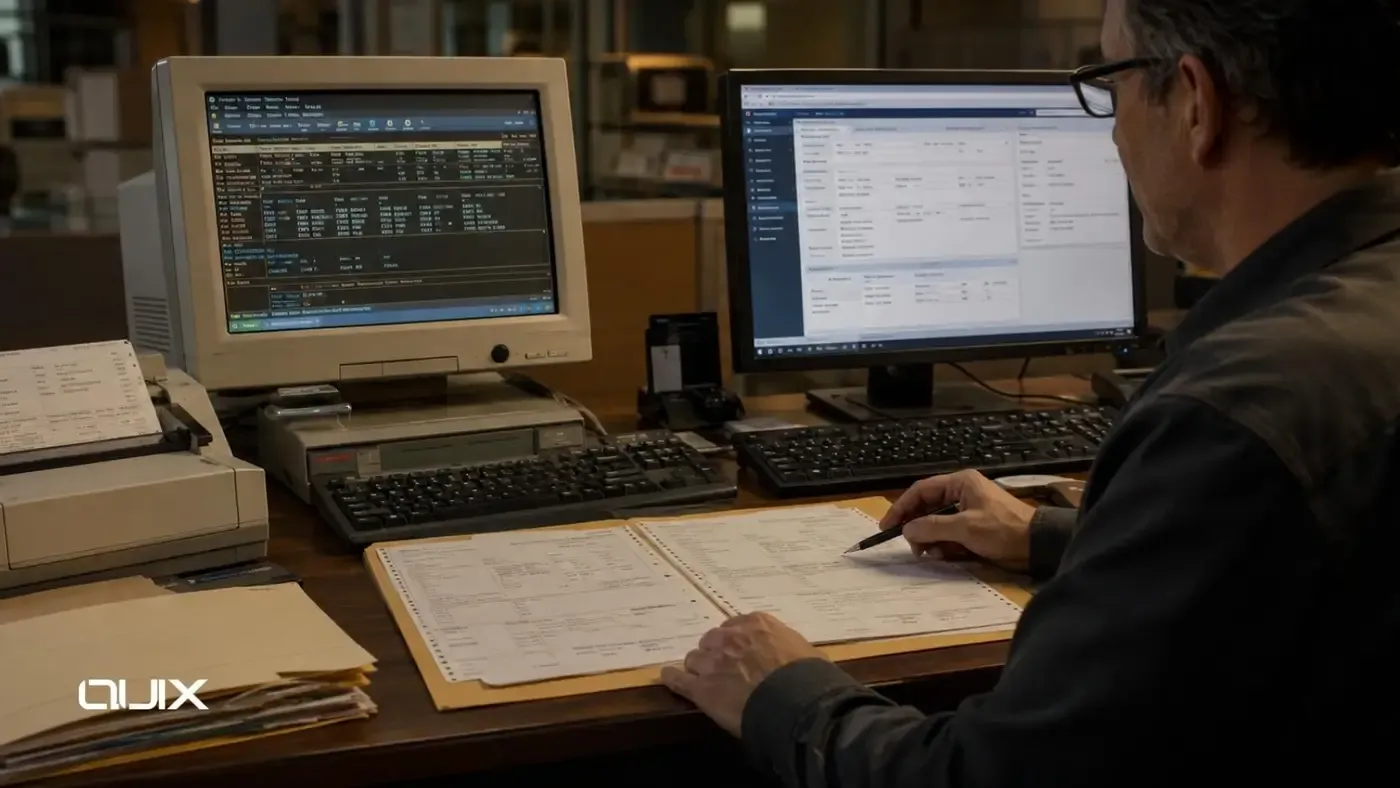
Legacy systems stay in production long past their architectural relevance because they work. They may be slow, expensive, and limiting — but they process transactions, hold critical data, and support operations that the business depends on.
Replacing a system that works, even imperfectly, requires justifying significant cost and risk against benefits that are often described in architectural terms that leadership finds abstract: scalability, maintainability, integration readiness, AI compatibility.
The more important reason legacy systems persist is that the risk of replacing them is real and the cost of a failed migration is high. ERP migrations routinely go over budget and over schedule. CRM replacements frequently result in temporary sales visibility losses. Core platform rebuilds can create months of operational disruption.
Legacy modernization is not primarily a technology challenge. It is a risk and sequencing challenge. The organizations that do it successfully treat it as an architectural program, not a platform procurement.
Defining the Modernization Paths
Path 1: Rebuild
Rebuilding means designing and building a new system from scratch to replace the legacy platform. The new system is designed around the current operating model, uses modern architecture patterns, and is built with integration, scalability, and AI readiness in mind.
Rebuilding offers the highest architectural quality and the cleanest outcome. It also carries the highest initial cost, the longest timeline, and the greatest operational risk during transition. It is appropriate when the legacy system's architecture is so deeply flawed that it cannot be extended or integrated without creating more problems than it solves.
Path 2: Replace
Replacing means selecting a modern commercial platform and migrating the functionality and data from the legacy system to the new platform. This is the path taken by most ERP, CRM, and HRIS modernization projects.
Replacement can be faster and less risky than rebuild when the business requirements align well with a modern platform's capabilities. It becomes problematic when the legacy system contains significant custom business logic that the replacement platform cannot accommodate, or when the data migration is structurally complex.
Path 3: Integrate
Integration means keeping the legacy system in place but connecting it to modern systems, data pipelines, and interfaces through an integration layer. The legacy system continues to run core functions while modern capabilities are built around it.
Integration is appropriate when the legacy system contains business-critical processes or data that cannot be migrated safely in the short term, but when the organization needs modern analytics, AI capabilities, or user interfaces that the legacy system cannot provide.
Integration modernization is often a phase in a longer-term replacement strategy, allowing the business to gain modern capabilities without a complete cutover.
Path 4: Phased Modernization
Phased modernization decomposes the legacy system into functional domains and replaces or rebuilds each domain sequentially, while maintaining the overall system's operational continuity through integration bridges.
This approach reduces migration risk by avoiding big-bang cutover, but requires careful architectural governance to prevent the integration bridges from becoming permanent technical debt. It is most appropriate for large, complex, deeply embedded systems where complete replacement or rebuild is too risky to execute in one program.
Rebuild vs Replace vs Integrate: Decision Matrix
Use this matrix to evaluate which modernization path is most appropriate for a specific legacy system.
|
Evaluation Dimension |
Rebuild |
Replace |
Integrate |
Phase |
|---|---|---|---|---|
|
Architectural flexibility |
Highest |
Moderate |
Low |
Moderate |
|
Implementation risk |
High |
Medium-High |
Medium |
Medium-Low |
|
Time to value |
Longest |
Medium |
Shorter |
Variable |
|
Upfront cost |
Highest |
High |
Medium |
Distributed |
|
Data migration complexity |
High |
High |
Low-Medium |
Managed incrementally |
|
AI and integration readiness |
Full |
Depends on platform |
Partial (via layer) |
Grows over time |
|
Business logic preservation |
Redesigned |
Partial |
Preserved |
Selective |
|
Operational continuity during transition |
Risk of disruption |
Risk of disruption |
High |
Highest |
When to Rebuild
Rebuild is the right choice when the legacy system's architecture is fundamentally incompatible with the operating model the organization needs to support.
This typically applies when the system was built on technology that cannot be meaningfully extended, when the business logic embedded in the system is no longer aligned with current operations and too entangled to modify safely, when the data model is so structurally compromised that migration cannot produce clean data without rebuilding the model itself, or when regulatory, security, or AI requirements cannot be met by extending or wrapping the existing architecture.
Rebuild programs should be treated as new product development, not system migrations. They require product thinking, architecture design, user adoption planning, and a parallel run strategy that allows the new system to be validated in production before the legacy system is decommissioned.
When to Replace
Replace is the right choice when a modern commercial platform covers the majority of the business requirements the legacy system currently supports, and when the data and configuration migration can be executed without prohibitive complexity.
This is most common in ERP modernization (from end-of-life platforms to modern cloud ERP), CRM replacement (from legacy on-premise systems to modern SaaS platforms), and HRIS migration.
The critical risk in replacement programs is the gap between the legacy system's custom business logic and the replacement platform's standard functionality. Before selecting a replacement platform, organizations should document the business logic in the legacy system that is not covered by the replacement platform's standard configuration. This gap is where replacement projects most frequently go over scope, budget, and timeline.
When to Integrate
Integration is the right choice when the legacy system must remain operational in the short to medium term — due to data complexity, operational dependency, or migration risk — but the organization needs modern capabilities that the legacy system cannot provide.
The integration path allows the organization to build a modern data layer, analytics infrastructure, AI capabilities, or new user interfaces on top of the legacy system without requiring a full replacement.
The risk of the integration path is creating a permanent dependency on a legacy system that was supposed to be transitional. Integration architecture must be designed with the long-term modernization path in mind, so that integration bridges can be cleanly removed when the replacement or rebuild is eventually executed.
The AI Readiness Factor
Legacy systems are typically the most significant obstacle to enterprise AI adoption. They generate data in formats that modern AI systems cannot easily consume, expose limited or undocumented APIs, enforce access controls that prevent AI systems from accessing operational context, and contain business logic that is too opaque to serve as a foundation for AI-assisted decision making.
When evaluating legacy modernization paths, AI readiness should be a primary evaluation criterion, not a secondary consideration. The path that produces the fastest route to a clean, accessible, well-governed data architecture is typically the path that enables the broadest AI adoption in the shortest time.
Organizations that modernize with AI readiness as a design goal — rather than retrofitting AI onto a modernized but still opaque system — consistently achieve better AI production deployment rates and higher business value from their AI investments.
Common Modernization Mistakes
The most expensive mistake is treating the modernization as a like-for-like migration. Rebuilding or replacing a system to do exactly what the legacy system did is a missed opportunity. Modernization should redesign the operating model, not just the technology layer.
A second mistake is underestimating data migration complexity. Data in legacy systems is often denormalized, inconsistently structured, partially duplicated, and governed by undocumented business rules. Data migration should be scoped as a major workstream, not a task that follows system configuration.
A third mistake is failing to manage user adoption. A modern system that users do not understand or trust will develop shadow processes alongside it. User adoption is a design and change management challenge that should begin in the architecture phase.
A fourth mistake is choosing the modernization path based on vendor preference rather than architectural analysis. Platform vendors have strong incentives to recommend replacement. The decision should be based on an honest assessment of business requirements, data complexity, and operational risk.
FAQ
When should a company rebuild its legacy system?
When the legacy system's architecture is fundamentally incompatible with the operating model needed, when its business logic is too entangled to modify safely, or when regulatory, security, or AI requirements cannot be met by extending the existing system.
When is replacing a legacy system the right choice?
When a modern commercial platform covers the majority of business requirements and the data migration can be executed without prohibitive complexity. Most appropriate for ERP, CRM, and HRIS modernization where standard platforms are mature.
What is the risk of integration as a modernization path?
The main risk is creating a permanent dependency on a legacy system that was intended to be transitional. Integration architecture must be designed with the long-term modernization path in mind to avoid embedding the legacy system more deeply.
How does AI readiness factor into legacy modernization decisions?
Legacy systems are typically the main obstacle to AI adoption because they produce inaccessible, opaque, or unstructured data. The modernization path that most quickly produces a clean, governed data architecture typically enables the broadest and fastest AI adoption.
What is the most common legacy modernization mistake?
Treating modernization as a like-for-like migration — rebuilding or replacing the system to do exactly what the legacy system did, rather than using modernization as an opportunity to redesign the operating model.