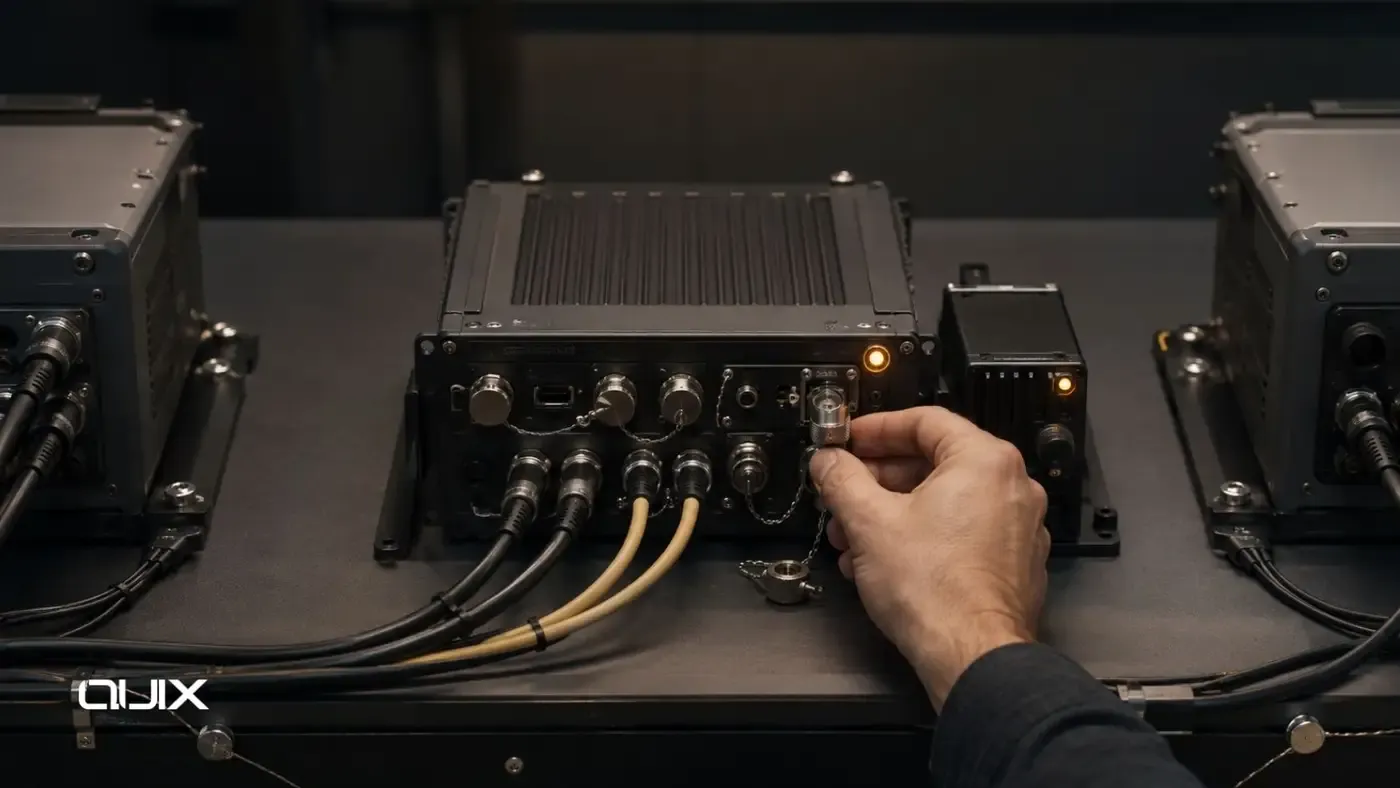
Every integration you build is a connection between systems — and every connection is a potential entry point. The API that allows your CRM to update your ERP is also a pathway that, if poorly secured, allows unauthorized access to both.
Integration security is not a feature to add after the integration is working. It is a design requirement that shapes every architectural decision from the start. Authentication models, authorization scopes, encryption standards, audit logging requirements, vendor access controls, and governance procedures must all be defined before a single integration connection is built, not discovered during a security review after deployment.
Executive Summary
Enterprise integration security encompasses the controls, standards, and governance structures that protect data as it moves between systems, ensure that only authorized callers can trigger integration actions, and provide the audit trail that compliance and incident response require.
Integration creates a broader attack surface than any individual system because it exposes the capabilities and data of multiple systems through a shared connection layer. Securing this layer requires a coherent approach to authentication, authorization, data protection, observability, third-party risk, and governance — applied consistently across every integration in the architecture.
This article explains the core security requirements for enterprise integration architecture, the most common vulnerabilities in integration design, and the Quix Enterprise Integration Security Framework for evaluating and improving your current integration security posture.
Why Integration Security Deserves Dedicated Attention
Integration security is distinct from application security and infrastructure security because the threat model is different. Individual systems can implement their own security controls, but integration connects those systems in ways that can bypass those controls if the integration layer itself is not secured.
A well-secured CRM and a well-secured ERP can both be compromised if the integration between them does not enforce appropriate access controls. If the integration credential has read-write access to all records in both systems, a compromised credential gives an attacker access to the combined data of both platforms — far more damaging than the compromise of either system individually.
Third-party integration risk compounds this. When integration involves external vendors — iPaaS platforms, SaaS tools, partner systems — each external party that the integration layer touches becomes a potential vector. The security of the integration is only as strong as the weakest point in the chain, including points the organization does not directly control.
Core Security Requirements for Enterprise Integration
Authentication: Proving Identity at the Integration Layer
Every integration connection must authenticate before data can be accessed or actions can be triggered. The authentication mechanism should use modern, auditable standards rather than static credentials embedded in code or configuration files.
OAuth 2.0 with client credentials is the standard for machine-to-machine authentication in integration scenarios. It provides scoped, time-limited tokens that can be rotated without code changes, revoked without access to the calling system, and audited to identify which integration triggered which data access.
API keys remain common in integration authentication, but they carry significant risk if not managed properly. Keys embedded in integration configuration files, shared across multiple integrations, or lacking expiration controls represent common and preventable security vulnerabilities.
Authorization: Scoping What Each Integration Can Do
Authentication answers "who is calling?" Authorization answers "what are they allowed to do?" In integration architecture, authorization must be scoped to the minimum permissions required for each specific integration to perform its intended function — a principle known as least privilege.
An integration that synchronizes customer account status from the CRM to the ERP should have read access to the relevant CRM fields and write access to the specific ERP fields it updates. It should not have access to financial records, employee data, or system configuration — even if those are technically accessible through the same API.
Least privilege in integration authorization reduces blast radius. When an integration credential is compromised, the damage is limited to what that specific credential was authorized to access. Broad credentials turn credential compromises into enterprise-wide data breaches.
Encryption: Protecting Data in Transit and at Rest
Data moving through integration connections must be encrypted in transit. Transport Layer Security (TLS) 1.2 or higher is the baseline standard for integration connections that carry business data. Weaker encryption standards or unencrypted connections are not acceptable for integrations that handle customer, financial, or operational data.
For highly sensitive data categories — personal information, financial records, health data, legal documents — payload-level encryption provides an additional protection layer. Even if the transport is compromised, payload encryption ensures the data content is not readable without the decryption key.
Encryption key management is an often-overlooked component of integration security. Keys that are not rotated, stored in plain text in configuration files, or shared across integration environments are security vulnerabilities regardless of the encryption algorithm applied.
Audit Trails: The Accountability Layer
An audit trail is a tamper-evident log of which integration accessed which data, when, what it did with it, and what the result was. In integration architecture, audit trails serve three functions: security incident investigation (what data was accessed during a breach?), compliance demonstration (can we show the regulator that data was handled according to policy?), and operational troubleshooting (which integration call produced this unexpected outcome?).
Audit trails must be designed into the integration architecture from the start. Retrospectively adding audit logging to an integration layer that was not designed for it is technically complex and frequently incomplete.
Vendor and Third-Party Access Controls
When iPaaS platforms, SaaS tools, or partner systems participate in the integration architecture, each represents an external party with access to internal data and system capabilities. Vendor security requirements should be assessed before platform selection and documented in the integration security design.
Vendor access should be scoped, monitored, and subject to the same least-privilege principles applied to internal integrations. Access credentials provided to vendors should be issued specifically for vendor use, tracked separately, and revocable without affecting other integrations.
The Enterprise Integration Security Framework
Quix evaluates and designs integration security across six layers. Each layer addresses a distinct security requirement in the integration architecture.
|
Security Layer |
Design Requirement |
Risk If Absent |
|---|---|---|
|
Identity |
OAuth 2.0 or equivalent per-integration authentication |
Shared or static credentials enable broad unauthorized access |
|
Authorization |
Least-privilege scopes for each integration credential |
Compromised credential exposes full system access |
|
Encryption |
TLS 1.2+ in transit, payload encryption for sensitive data |
Data interception exposes business-critical information |
|
Audit |
Structured, tamper-evident integration access logs |
Breach investigation and compliance demonstration impossible |
|
Vendor Risk |
Scoped, monitored, revocable access for external parties |
Third-party compromise cascades to internal systems |
|
Governance |
Policy for integration credential rotation, review, and decommission |
Credential sprawl and uncontrolled access accumulate over time |
Identity and Access Management for Integration Systems
Integration systems — APIs, middleware, iPaaS flows, webhook handlers — are system identities that must be managed with the same rigor applied to human user identities. In many enterprises, this does not happen. Integration credentials are created for immediate use and never reviewed. Service accounts accumulate permissions over time. Credentials from decommissioned integrations remain active.
A mature integration security posture requires an inventory of all integration identities, a documented record of their authorized scopes, a rotation schedule for their credentials, and a decommission process that revokes credentials when an integration is retired.
Role-based access control (RBAC) principles apply to integration identities just as they apply to user identities. Each integration should be assigned a role that defines its authorized access scope. When integration requirements change, the role definition changes rather than adding ad-hoc permissions to an existing credential.
Observability as a Security Control
Integration observability — monitoring, alerting, and logging of integration behavior — functions as a security control as well as an operational one. Anomalous integration behavior (unusually high call volumes, access to data ranges outside normal patterns, calls at unexpected times, failure patterns that suggest probing) can indicate security incidents in progress.
Security-oriented observability requires logging that captures enough context to reconstruct the sequence of events during an incident: which integration called which endpoint, with which credential, at which time, with what parameters, and what data was returned. This is different from operational logging, which focuses on latency and error rates.
Alerting should be configured for security-relevant events: failed authentication attempts above threshold, unusual access patterns, access to sensitive data categories outside normal operating windows, and credential rotation failures.
Integration Security Checklist
- Is every integration connection authenticated using a modern, auditable standard such as OAuth 2.0?
- Are integration credentials scoped to the minimum permissions required for each specific integration function?
- Is all data in transit encrypted using TLS 1.2 or higher across every integration connection?
- Is payload-level encryption applied to integrations that carry sensitive personal, financial, or legal data?
- Are audit logs maintained for all integration data access, with sufficient context for incident investigation?
- Is there an inventory of all integration identities with documented scopes, rotation schedules, and owners?
- Is there a decommission process that revokes integration credentials when an integration is retired?
- Are vendor and third-party access credentials issued separately, tracked, and independently revocable?
- Is security-relevant integration behavior monitored with alerting for anomalous patterns?
- Is there a governance process for reviewing and approving changes to integration authorization scopes?
Common Integration Security Mistakes
The most pervasive mistake is static credential reuse. Credentials created for one integration are reused for another, or shared across environments. When these credentials are compromised, the scope of the breach extends across every integration that uses them.
Overly broad authorization scopes are the second most common mistake. Integrations granted admin-level API access "for convenience" or "in case it is needed later" carry far more risk than the integration's actual function requires. Every unnecessary permission is a risk surface that provides no operational value.
Failing to decommission integration credentials is a governance failure with direct security consequences. In most organizations, integration credentials outlive the integrations that required them. Auditing active credentials against current integration requirements consistently reveals credentials that should have been revoked months or years earlier.
Treating vendor security as the vendor's responsibility is the final common mistake. The organization is responsible for the security of the data it shares with vendors through integration, regardless of whose platform processes it. Vendor access should be scoped, monitored, and governed with the same rigor applied to internal integrations.
FAQ
Why does integration require its own security framework?
Integration connects multiple systems through a shared layer, creating an attack surface that spans every system involved. A compromised integration credential can expose data from all connected systems simultaneously, making the integration layer a higher-risk target than any individual system it connects.
What is least privilege in integration security?
Least privilege means each integration credential is authorized only for the specific data and actions that integration function requires — nothing more. It limits the damage from credential compromise to the specific scope of that integration rather than exposing the entire system.
How should vendor and third-party integration access be managed?
Vendor access should be scoped to what the vendor specifically needs, issued as a separate credential not shared with internal integrations, monitored for anomalous usage, and independently revocable. Vendor security practices should be assessed before granting integration access.
What is the role of audit trails in integration security?
Audit trails provide a tamper-evident log of which integration accessed which data, when, and what it did. They enable security incident investigation, compliance demonstration, and operational troubleshooting — all of which require detail that operational monitoring alone does not capture.
How does observability function as an integration security control?
Security-oriented observability monitors integration behavior for anomalous patterns — unexpected call volumes, access to unusual data ranges, failure patterns that suggest probing — that may indicate a security incident in progress, before the incident has progressed to data exfiltration or system compromise.